
Metal Gear Solid: Master Collection Volume 2 - Switch 2 Review
"What a thrill"

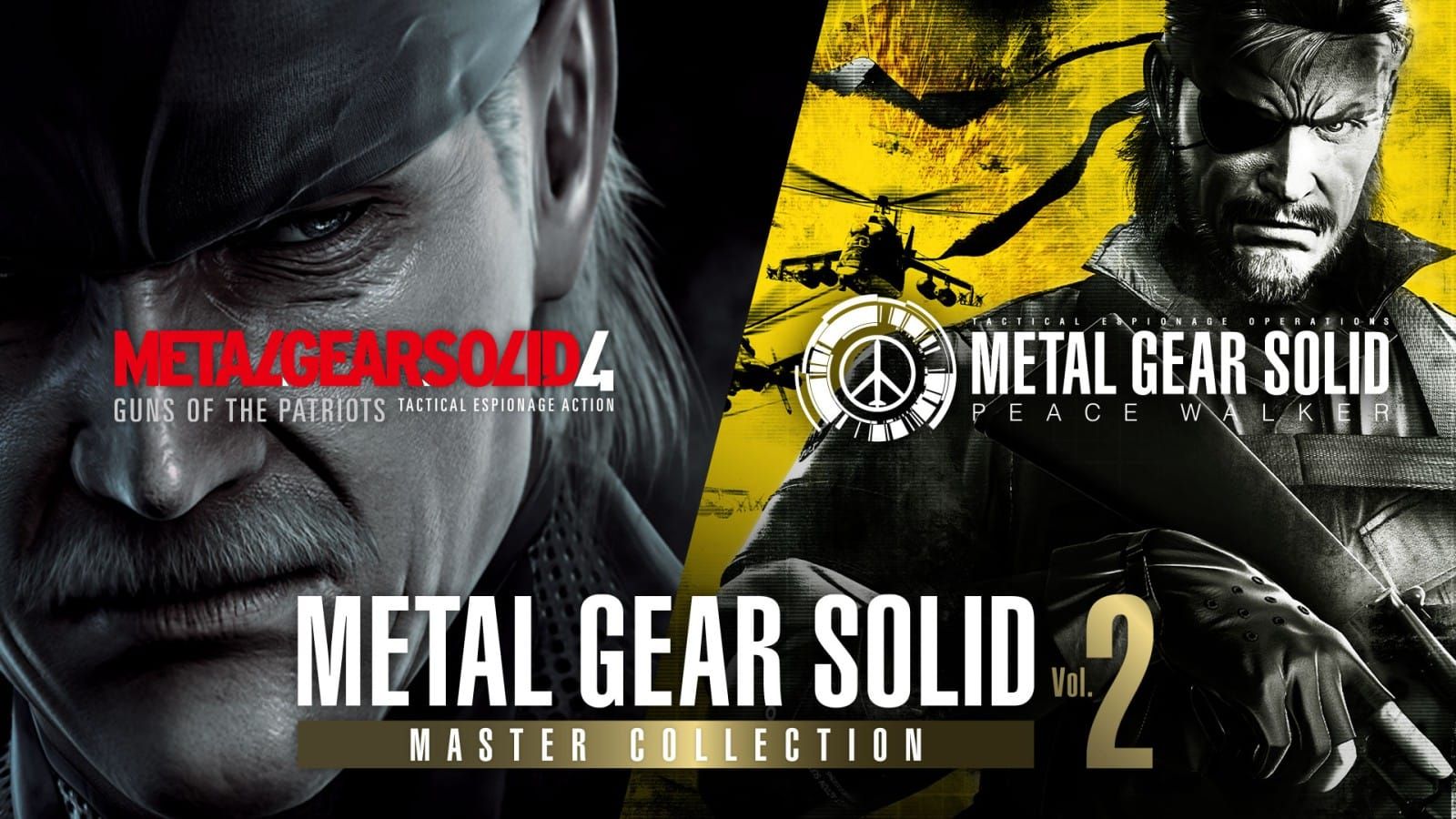
I was absolutely vibrational when it was confirmed that Metal Gear Solid 4 would be in the next collection of games from the series being released. For the longest time, it was the only mainline game in the series that I hadn’t played through. The capstone of the series’ story arc was trapped on the PS3 for years, and only now has it finally been unleashed from that prison, and it brought some friends. In truth, Master Collection Vol. 2 offered a smorgasbord of Metal Gear offerings that I’ve not played through in full before. Peace Walker and Ghost Babel should most definitely not be forgotten but it’s hard not to be overshadowed by the glorious return of something as legendary as MGS4. I’m going to take this game by game, however, because there are a few things that I want to say about each, so let’s start with those vaunted Guns of the Patriots.
The Good
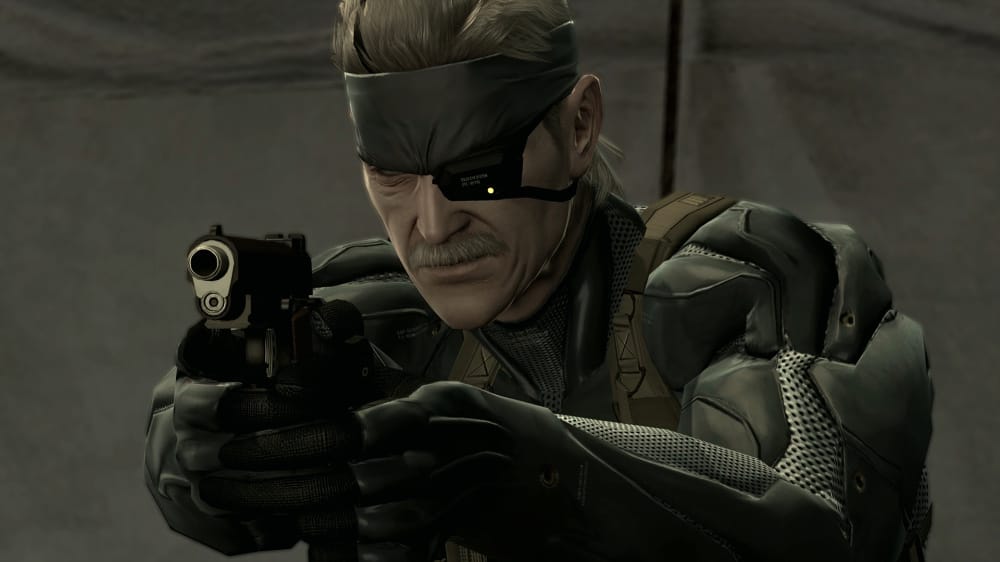
Metal Gear Solid 4: Guns of the Patriots
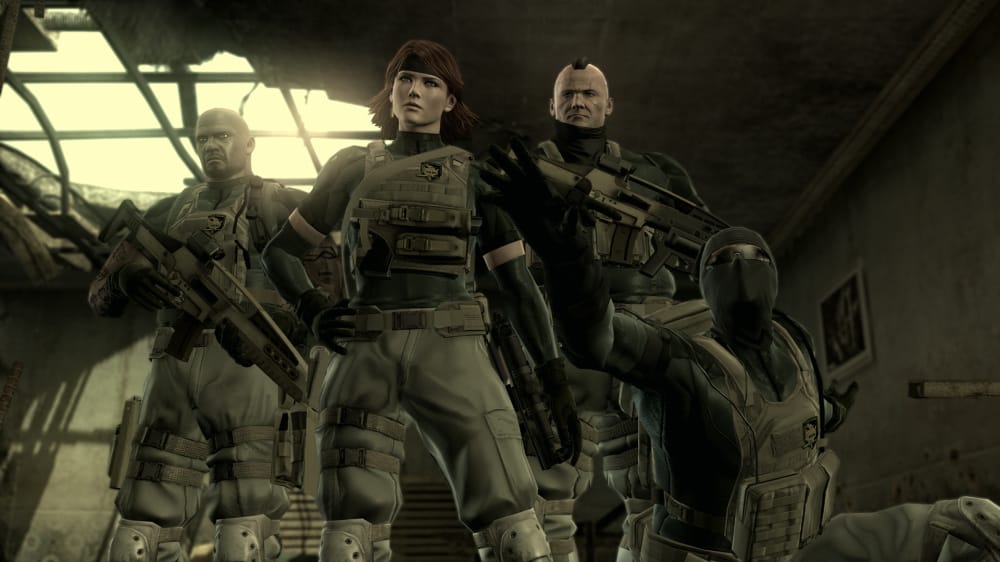
It really kept us waiting and is now easily the main star of the show; MGS4 has finally escaped the confines of its technological prison. Bringing the story arc of Solid Snake to a close, MGS4 is kind of legendary even amongst those that probably haven’t played the series. It gets very nostalgic and even though most of the main story beats had been spoiled for me over the years, there were still a few surprises in the minutiae that tend to get lost in the memes. The reason it had taken so long for the game to be ported to anything before now is because it was tightly coded around the PS3’s arcane architecture that remains a console anomaly to this day. Porting it wouldn’t just require changing a few lines of code to account for an engine change but a fundamental restructure of how the game’s code works. So, seeing a game that was trapped on a Sony-owned console for nearly two decades now running on a handheld Nintendo console, alongside one game for the PSP and another for the Gameboy Color, feels like a fever dream. It’s almost like the original vision for the Nintendo PlayStation never died.
And it runs shockingly well on the Switch 2. I’ve already played through the games in the PC version of the collection, which was optimised to a degree that you generally don’t really see anymore. Load times were almost non-existent, scene transitions were quick and snappy, and controls were responsive (within the clunky framework of the games themselves) – and that was essentially my experience with the Switch 2 version as well. I guess it shouldn’t be shocking, since the Switch 2 is far more powerful than the PS3 at this stage. There are a couple of issues that we’ll get into later but this collection is, hands-down, the definitive way to experience MGS4. Whether you experience it on the Switch 2 or not is entirely down to personal preference rather than seeking out the smoothest experience.
Just as a general point of interest, having played MGSV: Phantom Pain before Peace Walker or MGS4, it’s interesting to see the throughline from MGS3 to those games. MGS4 ditches the classic soliton radar of the first two MGS games, which gave you the ability to see exactly where guards were looking. Instead, the new radar gives more of a general impression of their field of perception and forces the player to pay more attention to what the guard themselves is actually doing. Bringing over the camo mechanic from MGS3 meant making stealth choices based on the best ways of blending into environments, rather than simply relying on enemy blind spots, and this is where we first get the crouch walk as well. These are all cool ideas and their presence in the game in 2007 probably seemed cooler than it does now because they would go on to become so much more in later games. It’s still interesting to see how this stuff evolved over time, however. I just wish it was in service to a better game. We’ll get to that.
Metal Gear Solid: Peace Walker
If you’re the kind of person that’s into Metal Gear deep lore as well, then Peace Walker is very much an essential play. It effectively takes place directly before MGSV though the events are only loosely connected, telling the story of how Big Boss started Militaires-Sans-Frontiers, the first major private military force that he would command. Also, some anime chick is there making googly eyes the whole time; it’s very weird. To be clear, while interesting and important for the background lore of Metal Gear generally, I’m not really here for the story. It’s for the addictive nature of its game loop that I play Peace Walker. The portable nature of the Switch 2 may also make it the most ideal way to experience Peace Walker, since it was originally a handheld game intended to be played in bursts on the go.
Peace Walker is kind of amazing to play and I wish I had known about it sooner. I am going to go ahead and say that this is the first real instance of Kojima being like, “You made this? … I made this,” as Peace Walker is just a very polished version of Portable Ops. Conceptually, not literally. Such polish, however, and I can see why this was both intensely popular in Japan and perhaps the most unpopular game of the whole series in the west upon release. Do you like the gameplay loop of the classic-style Monster Hunter? You’re probably going to love Peace Walker then. In fact, I’d go as far as to say that Peace Walker is to Monster Hunter Classic what MGSV is to Monster Hunter World. There was an official crossover between the two games that’s been preserved for the Master Collection, where Big Boss and friends can battle a giant, literal monster mech and, yes, that is as incredible as it sounds.
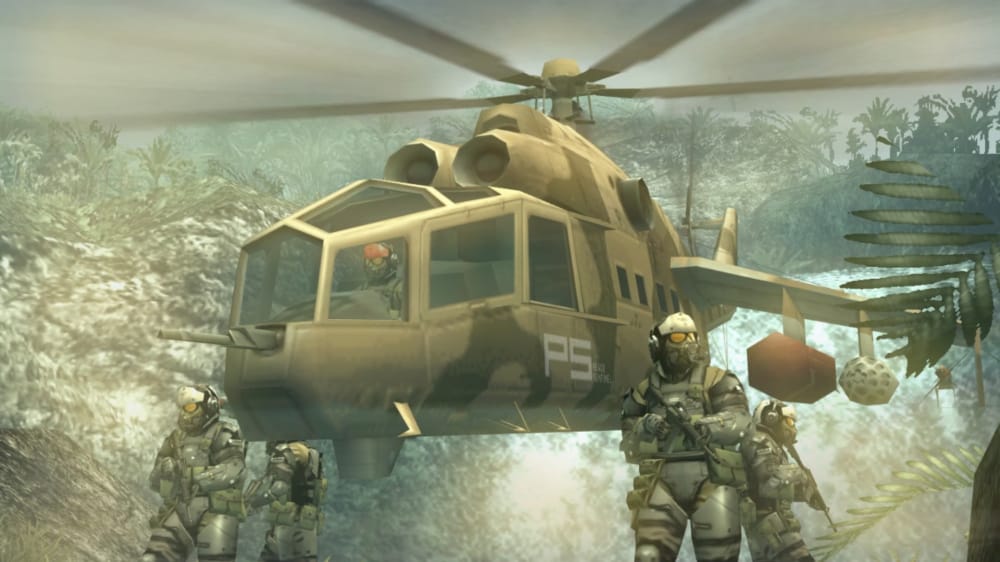
If you’ve played MGSV, then you’ll already be more or less familiar with Peace Walker’s game loop but the gist of it is: Pick a mission, pick your load out, join with friends (“optional”), then complete the objectives. Along the way you’re encouraged to capture enemy soldiers like Pokémon so you can fill out Mother Base’s roster, and in between missions you’ll return to Mother Base to build it out, train soldiers, upgrade gear, etc. Peace Walker has a lot more missions, however, and most of them are clearly designed to be handled by multiple players. It’s not impossible to do it solo; it’s just very difficult and not the intended way. Fortunately, the online play for Peace Walker, while a little jank to get going in the UI, is pretty stable once you’ve partied up with other players. The real challenge is finding players, however, as I think people are still somewhat enamoured with MGS4. Still, it’s there for you and your friends, which is what I’d prefer over playing with randos anyway.
Metal Gear: Ghost Babel
Finally, we arrive at Ghost Babel, which feels like an oddity in its inclusion but a welcome one to be sure. I genuinely would have expected Portable Ops over this because, while the canonicity of that game is often debated, it still very much falls into the established timeline of the main Metal Gear games, the same as Peace Walker does. Ghost Babel, on the other hand, could basically be considered a sequel to the NES title Metal Gear 2: Snake’s Revenge. The director of Ghost Babel later went on to also lead the development teams for Ac!d and Ac!d 2, and some might say that these games all form a kind of alternate timeline. Me, I say that. Also, some other… Learned scholars.
My point is that you’d think, given the Ac!d games were also smaller PSP titles themselves, that perhaps they’d be put together in a Master Collection 3 for handheld games. It’s weird that we have this, is what I’m saying and the game is equally, if not stranger. It’s still a Metal Gear game, after all, which means excessively long CODEC calls (by Gameboy Colour standards, at least) and bizarre characters that border on the offensive. We’ll…. Well, we’ll get to one of those… I wouldn’t venture to say more about it out of fear of potential spoilers for a genuinely fun and strange piece of gaming history. It isn’t very long; you should really check it out.
What I will say about the entry is about the way it feels lessons have been learned from previous Konami collections. What I’m fairly sure is an emulation of the game, as opposed to a straight port, is pretty great despite what purists may say. I have no idea if it controls, looks, or feels exactly the same as the non-emulated game and, frankly, I don’t care; this has a save state and a rewind feature, I’m good. I might have liked for there to be multiple save states but it’s not the worst; arguably, it’s not the kind of game that needs them. You can also rebind the controls, which is nice. There are, like, five of them, but hey, they’re there. Given it’s just a single, smaller game, they’ve put a decent amount of shine on it.
TL;DR
- All games, including MGS4, run fantastically
- Excellent polish for emulation of Ghost Babel
- What a delight that we’re playing these in 2026
The Bad
In terms of how these games run, the way they play (at least in terms of faithfully recreating them), and the overall presentation of the collection? It’s all wonderful and I really have nothing bad to say. I do have some other things I need to talk about, though, for the games themselves, and it didn’t seem like there was a good place anywhere else, so here we go.
Metal Gear Solid 4: Guns of the Patriots
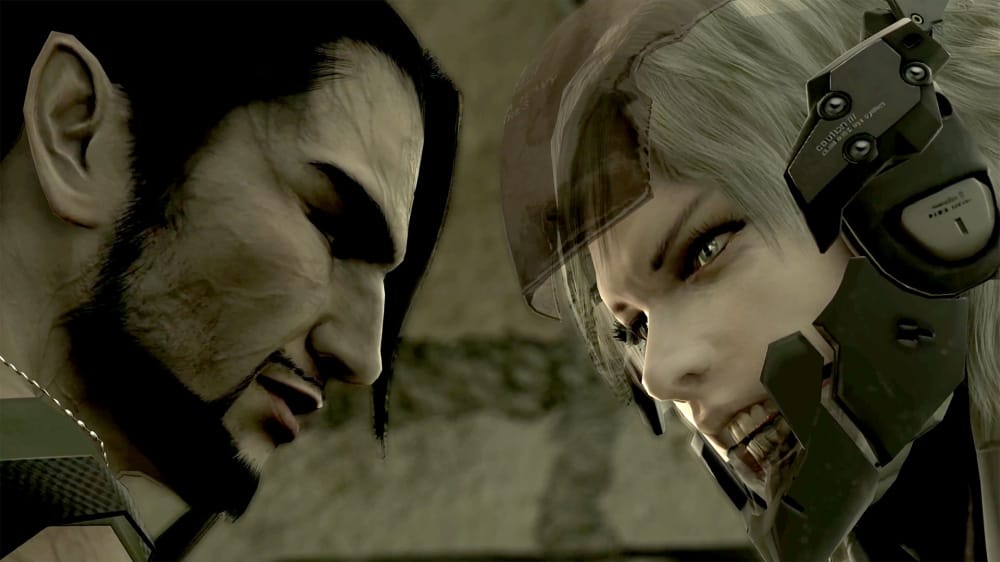
There are a couple of sections in MGS4 that use pre-rendered cutscenes because of the composition of the shots. Multiple streams happening on-screen at once was more than the PS3 could handle back in the day and pre-rendering was the solution. These sections in particular show their age, as they’re using the best CGI available to the dev team in… 2007. It’s hard to hold this against the current dev team, as the only solution would have been to completely reconstruct those scenes and that’s a lot of effort for what amounts to… Okay, probably like twenty minutes in real time, but this is a Kojima game we’re talking about, so, percentage-wise, that’s still not much.
I don’t hate MGS4 but I do wonder if, perhaps, hearing the hype over the years killed any chance of a fair critique of the game once I got there because it’s just okay. As a finale to the story of the Metal Gear series in general, I think I would have preferred something a little different if I’m being quite honest. From that perspective, at least, I enjoyed it far more than MGSV. The plot contrivances of Metal Gear were a lot more fun when they were yes-anding the events of the previous game like a demented improv group that doesn’t know when to stop. It’s when the games go back to fill in the gaps of the far past in Big Boss’ time that I generally tend to switch off. Kojima, bless him, truly can’t help himself at the best of times and I maintain that even MGSV still only exists to justify Ocelot’s bizarre love quest for Jack. Not that one.
It’s clear that what MGSV ultimately became for gameplay, however, started here in MGS4 as a nascent, half-realised idea that didn’t quite land the mark. The stealth sections, while a bit more open than the previous games, are still fairly proscribed in their solutions, and the combat is very so-so. The camera is often claustrophobically close to Snake, which makes both stealth and combat difficult and will, at times, hilariously result in things like the Oil Drum snake being able to hide under, taking up basically the entire viewable area. These issues are made all the more apparent during the boss fights. Normally a highlight of the Metal Gear games, the aforementioned issues really bring these moments down and make the bosses an absolute chore to face down in MGS4. It’s not very fun to play, is what I’m saying. I’m glad I waited nineteen years.
Metal Gear Solid: Peace Walker
This is a complaint that’s coming sixteen years late but I’m really not a fan of the hand-drawn cutscenes in Peace Walker. Their usage feels inconsistent, some scenes being 3D animated with the in-game models and some being the hand-drawn cutscenes. Frustratingly, the cutscenes also have QTEs baked into them because that was the style at the time. In general, I’m just not a fan of the presentation, I guess. Also, Peace Walker is, unsurprisingly for a Kojima game, kinda pervy; I’m specifically referring to the zoom-in x-ray vision some cutscenes have for scoping out women’s undergarments. For a series that has an established trope of "sneaking up on women in the bathroom in a state of undress", even this feels like a bit much. Especially when it’s a dying soldier or… Wait, how old is Paz in Peace Walker? … Okay, Kojima, but you still let the player assume she was underage when you put that mechanic in there and also I still know what you did with her in Ground Zeroes.
Metal Gear: Ghost Babel
There’s not a huge amount here, like I said, it’s not a very long game, and gameplay-wise this game is solid. However, remembering that the Gameboy Colour was contemporary to the Nintendo 64, there are details about Ghost Babel that are certainly of their time. That includes an honest-to-goodness Australian Aboriginal man with a giant, razor-sharp boomerang and an attack hawk companion as a boss character; when did this first come out again? 2000? … I at least can’t blame this one on Kojima but that still feels a bit late for this sort of thing.
TL;DR
- Some parts of MGS4 where it unavoidably shows its age
- Peace Walker is very much a game of its time
- Ghost Babel has that one ill-advised bit

Final Score: 9/10
The Master Collection Vol 2 doesn’t feel quite as big as its predecessor; certainly, there are fewer than half the titles of that first lot. What it lacks in volume, however, it makes up for in quality by bringing some of the least accessible titles of the franchise to modern platforms. The Switch 2 port runs just about as fast as it did on my PC and I don’t feel like anything was lost in terms of graphical fidelity, which isn’t surprising given the long generational gap between it and the PS3. The only negative things I have to say are around the ways these games haven’t exactly aged well for one reason or another. The collection itself, though? More or less exactly what you’d hope it would be. If you’re a Metal Gear, however, fan then this is an easy pickup, and being able to play it on a portable handheld? What a thrill.
Thank you for checking out our Metal Gear Solid: Master Collection Volume 2 Switch review, thank you to Konami (via Five Star Games) for providing the review code and thank you to our Patreon Backers for their ongoing support:
- Andrew Caluzzi (Inca Studios / Camped Out)
- Bel Cubitt
- Bobby Jack
- Jack Caven
- Nintendo Maniacs
- RedHero